
How can governments make it easier to identify the people and companies behind infrastructure contracts?
In September, CoST and Accountability Lab brought together 28 practitioners from six countries in Panama City to design two digital tools that could help answer this question.
CoST Technical Director Evelyn Hernández reflects on what emerged from the workshop and the next steps for Ecuador and Panama.
Three days in Panama City
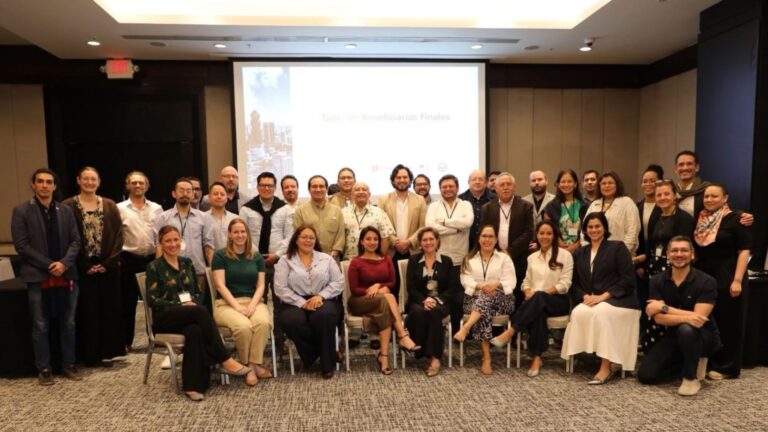
From 15 to 17 September, CoST and Accountability Lab convened the Beneficial Ownership and AI Workshop in Panama City. The event brought together 28 participants from Chile, Ecuador, Guatemala, Honduras, Panama and Paraguay; practitioners working on beneficial ownership transparency, public procurement data and digital tools, alongside our technical partners C4ADS and AidData.
The workshop was deliberately hands-on. Rather than discussing transparency in the abstract, participants co-designed a concrete product: an online tool for each country, to be developed over the next three months and integrated into the infrastructure data platforms in Ecuador and Panama.
The starting point was not technology but evidence. National consultations and scoping studies carried out by CoST local partners had already mapped the relevant policies, data sources and obstacles in each country. This ranged from information scattered across institutions to the difficulty of tracing transnational, multi-level ownership chains, holdings, trusts and consortia.
Participants then worked through successive rounds of ideation, presenting their proposals to the full group, receiving feedback and refining them – a process that moved from problems to users to data, and only then to technological functions.
That sequence matters more than it may appear. Technology in infrastructure development should be harnessed to respond to a clearly identified information need; it should not determine the problem that users are expected to solve.
Two countries, two digital tools
By the end of the third day, participants had agreed on specifications for two tools, each responding to the particular challenges identified in Ecuador and Panama.
Ecuador: Understanding who benefits from infrastructure contracts
In Ecuador, the challenge is historical. The official beneficial ownership tool focuses on active procurement processes, so understanding who has participated in the infrastructure market over time, who stands behind those companies, and where both the companies and their owners come from requires recovering and structuring data from multiple sources that do not easily speak to each other.
This historical perspective is important because ownership structures change. Knowing who controls a company today does not necessarily tell us who controlled it when a contract was awarded.
The proposed tool will help address this by allowing users to identify the ultimate beneficial owners receiving the largest infrastructure contract awards, map relationships between owners and contractor companies through network visualisations, and flag discrepancies in beneficial ownership records across official sources.
Panama: Connecting companies, owners and contracts
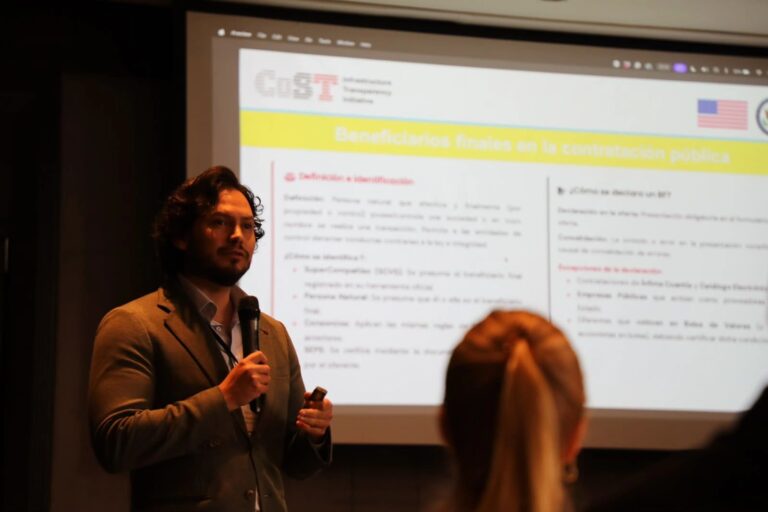
In Panama, the challenge is one of connection. No consolidated source links companies, contracts and beneficial owners, making it hard to see the market’s true composition: who participates and wins infrastructure contracts, who ultimately owns or controls those companies, their country of origin, and the links between apparently independent bidders.
The proposed tool will bring this information together through a single search, by company, individual or procurement process, that opens rich profiles connecting directors, shareholders, resident agents, sanctions, contract histories, beneficial owner origin, and even links between campaign donations and contract awards.
These connections could help users identify relationships or patterns that warrant closer scrutiny. Importantly, a match or red flag is not in itself evidence of wrongdoing, but a starting point for further investigation.
From workshop ideas to working tools
Over the coming months, CoST and Accountability Lab will work with programmers in each country to turn the co-created specifications into working tools.
The next step is to develop the tools and integrate them into the existing infrastructure data platforms in Ecuador and Panama, helping users explore relationships between companies, ownership and public contracts.
The energy in that room in Panama City left us optimistic. What began as a collaborative design exercise now provides a practical starting point for making infrastructure and ownership information more useful.
CoST and Accountability Lab organised the Beneficial Ownership and AI Workshop with support from the United States Department of State and technical contributions from C4ADS and AidData.
For more on why connecting beneficial ownership and infrastructure data matters, read our recent article, The Hidden Owners Behind Infrastructure.
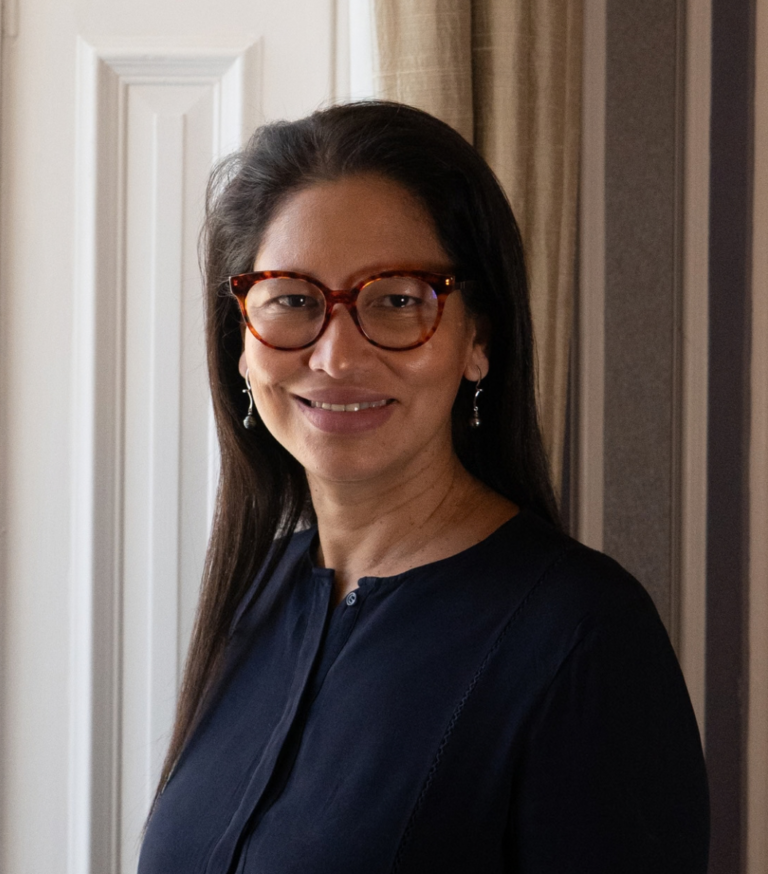 Evelyn is the Technical Director at CoST leading the technical assistance, capacity building services and supporting the design and implementation of CoST programmes globally. Evelyn previously served as CoST Head of Members leading the member programme and CoST Technical Advisor leading the development of the Open Contracting for Infrastructure Data Standard (OC4IDS) and the Infrastructure Transparency Index.