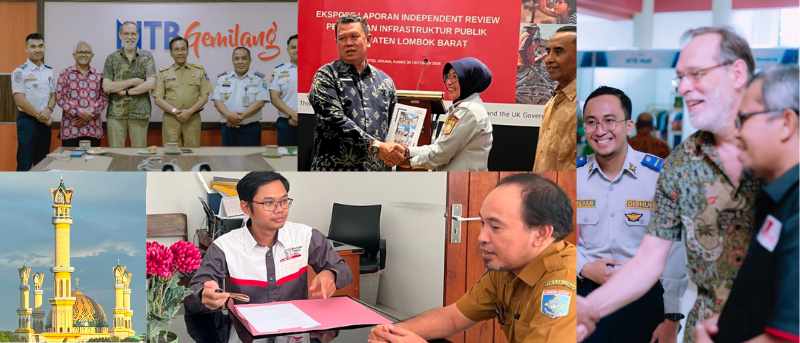
Our latest impact story, “The road to reform” explores the work of West Lombok and Nusa Tenggara Barat, with the support of CoST.
Indonesia faces a projected infrastructure financing gap of nearly 40% between 2025 and 2029. Despite this, West Lombok and Nusa Tenggara Barat (NTB) have built a culture of transparency resulting in tangible improvements in roads, water and sanitation facilities, and hospitals.
The story explores five key lessons useful for any region trying to increase transparency, accountability and participation in its infrastructure processes and delivery. It demonstrates the intertwined nature of the CoST approach with the achievements of the two regions.
Top 5 lessons:
- Local success can catalyse wider reforms. CoST’s work has shown success at both a national and sub-national approach. These Indonesian members have inspired other regions, with Belitung joining CoST in late 2024, and membership interest growing in other regions.
- Building on existing governance platforms accelerates reform. The Road Transport and Traffic Forum first used CoST data standards in transport projects, which then led to them developing and submitting West Lombok’s application to CoST. Building on their existing work, platforms and stakeholders while expanding into a broader, permanent accountability platform has prevented duplication, and supported problem solving and capacity building. This has supported government, private sector and civil society to work together. There has been a reduction in citizen complaints.
- Data creates value when used. Indonesian members have used a combination of methods including using data standards, dashboards, independent reviews of infrastructure projects, social accountability, the Infrastructure Transparency Index and training. 2,500 projects in West Lombok across roads, hospitals, and schools, savings of a total value of $135 millionUSD have been published, while NTB has published data on 952 projects, with a combined value of $127 million USD in the first six months.
- Improved public engagement can support outcomes. Both local governments have taken steps to grow public trust through community meetings, using a variety of means like podcasts, supporting stakeholders to understand community needs and encouraging residents to ask questions. This has led to progress in transport and market projects.
- Enabling the environment through decrees and data teams. Decrees have been issued in both locations. West Lombok’s decree mandated data publication through their INTRAS data portal, incorporating CoST’s data standards. NTB’s decree focused on the creation of a data publication team. While usually decrees are a government only process, both local governments worked with multiple departments, alongside the private sector and community organisations. The result of this was also positively reflected in the Infrastructure Transparency Index.
West Lombok and Nusa Tenggara Barat have both made brilliant strides in driving vital change. Find out about the work of more members through our impact stories.