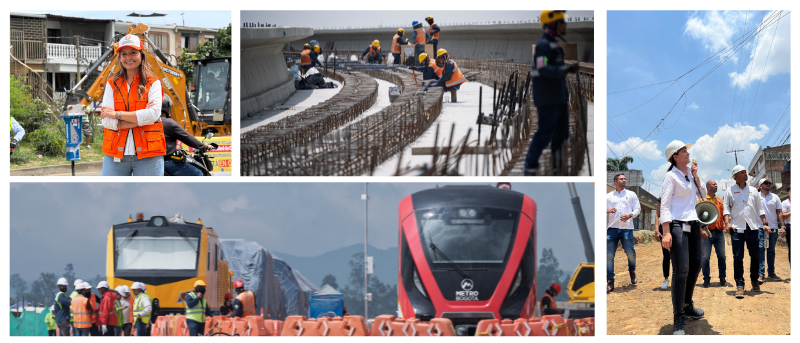
Bogotá and Cali were recognised under the Open Government Partnership’s Open Gov Challenge 2025 for reforms to improve public infrastructure. Their experience shows how using the CoST approach to publish infrastructure data can rebuild trust, strengthen oversight and improve how projects are delivered.
Bogotá: building a city-wide system for open infrastructure data
In Bogotá, transparency reform has meant tackling one of the most complex urban governance systems in Latin America. Rather than leaving data fragmented across institutions, the city has brought major investments into a single public platform — including flagship projects such as Metro Line 1. In just seven months, information on more than 130 projects was made public, covering a significant share of national public investment.
Bogotá’s experience also shows that publishing data is only part of the challenge. City leaders recognised that lasting transparency would require changing how institutions work together, not just how they report. To support this shift, the municipality convened joint workshops bringing together public agencies, contractors and civil society to build shared expectations around accountability and the use of infrastructure data.
This city-wide approach is reinforced by Bogotá’s long-established citizen oversight bodies that scrutinise public spending and project delivery, embedding transparency across the institutions shaping the city’s future.
Cali: turning transparency into citizen action
In Cali, infrastructure transparency has been driven by the need to rebuild public trust while managing the largest public loan in the city’s 500-year history. With 35 major regeneration projects planned between 2025 and 2027, city leaders recognised that technical reporting alone would not secure legitimacy for such a large investment programme.
Joining CoST allowed Cali to strengthen and expand its platform to open up infrastructure information developing practical ways for residents to engage with data — including a public feedback system for reporting problems through geolocated photos, and a maintenance map showing where crews are working in real time.
Opening up data has also begun to reshape market behaviour, prompting reforms that increased the number of bidders per tender and strengthened confidence in the integrity of the system.
A new roadmap for infrastructure transparency
Together, Bogotá and Cali show how infrastructure transparency can move beyond isolated pilots towards lasting institutional change. By embedding openness into everyday infrastructure management and creating tools that citizens can use, both cities are helping build a more transparent, accountable and participatory model for public investment — with lessons for Colombia and beyond.