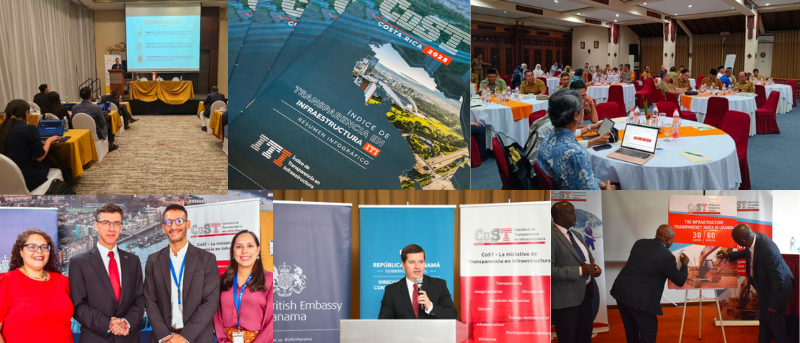
We’re delighted to showcase that many of our members have used our tool, the Infrastructure Transparency Index (ITI) as a tool for driving reform across the globe.
The Infrastructure Transparency Index measures transparency across four dimensions. It has been implemented 20 times across 14 countries and can be applied by any region or government using CoST’s open-access resources. In this impact story, we provide a selection of case studies from Latin America, Africa and Asia that have shown key lessons including:
- identifying recommendations through an evidence-based process;
- showing data and transparency gaps between frameworks and tangible application;
- measuring progress over time.
Ecuador
The ITI identified opportunities around improved data publication and alignment with international data standards. In response, Ecuador developed an online data platform aligned with CoST’s data standard (OC4IDS), since publishing more than $9.3 billion of infrastructure data since then, and embedded CoST’s role in their Integrity and Anti-Corruption Plan.
Panama
The Index provided recommendations around strengthening the Panama’s data platform and improving the regulatory framework. This led to a new regulation around infrastructure data being published in line with CoST’s data standard (IDS). They also implemented automated systems and ran training and workshops with various stakeholders to drive knowledge and support for their work.
West Lombok, Indonesia
Implementing the ITI demonstrated that improvements were needed in the availability of data across the project life cycle, and in institutional capacity for data publication. Since then, West Lombok consolidated 2,000 pieces of project information into their data portal, created an analytical dashboard, and West Lombok’s Government took ownership of the platform. This has supported stronger use of data for planning and oversight.
Uganda
Through applying the ITI twice, Uganda has been able to compare and track progress, leading to an increased score of 55%. Working with Government and public sector stakeholders, Uganda has introduced new systems to track publication of infrastructure data and increase public engagement and feedback mechanisms. This has led to tangible changes in a variety of sectors, especially transport.
Costa Rica
Costa Rica has implemented the ITI three times, also allowing a significant increase in their scores. They followed through on recommendations around systemic embedding of transparency, improving data across the infrastructure lifecycle and mechanisms for citizen participation. They developed a data platform using the OC4IDS, trained key stakeholders, secured new laws around public procurement and increased public engagement through a variety of methods.
Next steps
Alongside improvements to the ITI website, more members will be publishing their ITIs in the coming months – including several through our dedicated ITI week on 20th April. This provides more opportunities to track and compare progress.
Read the full selection of studies in English and in Spanish.