Kaduna in Nigeria launched their first Infrastructure Transparency Index (ITI) – a global tool developed by CoST to assess how transparent, participatory and accountable infrastructure systems are from planning through to delivery, and which crucially makes practical recommendations for improvement.
The scores reflect Kaduna’s strong progress on enabling environment and capacities and processes – especially with regulatory framework, digital information tools (thanks to their new portal), procedures and enablers to publish public information.
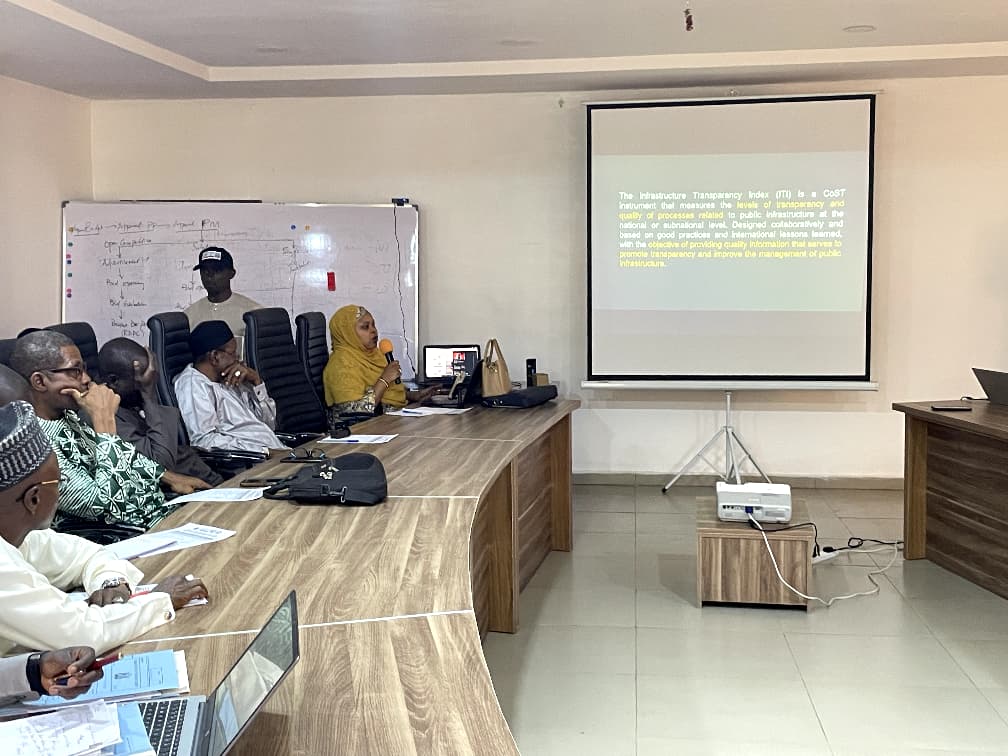
This Index also demonstrates opportunities for growth in citizen participation and information publication – including with project preparation and supervision and execution of contract implementation and procurement. From this assessment, they can provide key recommendations for the government, divided by short term, medium term and long term. These included:
- Formalising data publication procedures across all ministries, departments and agencies (MDAs)
- Enhancing the portal to enhance real-time tracking and monitoring
- Strengthening MDAs with resources and tools to manage processes independently
- Establish citizen engagement units at MDAs
- Developing a system of measurable performance indicators
- Digitalise infrastructure management systems
- Further embedding work with civil society and academia to support co-designed transparency initiatives and use of infrastructure data
- Integrate policy and project design cycles
Muhammad Sani Kassim, CSO member of the Multi-Stakeholder Group said “Key learning points from this Index include co-creation principles with a good working relationship between government, civil society, private sector and other communities who benefits from these projects. The impact is our ability to take these key recommendations to improve and strengthen the systems for procurement.”
For more information on Kaduna’s ITI results visit: https://infrastructuretransparencyindex.org/countries/